The Real History of Pirate Cats · Part 1
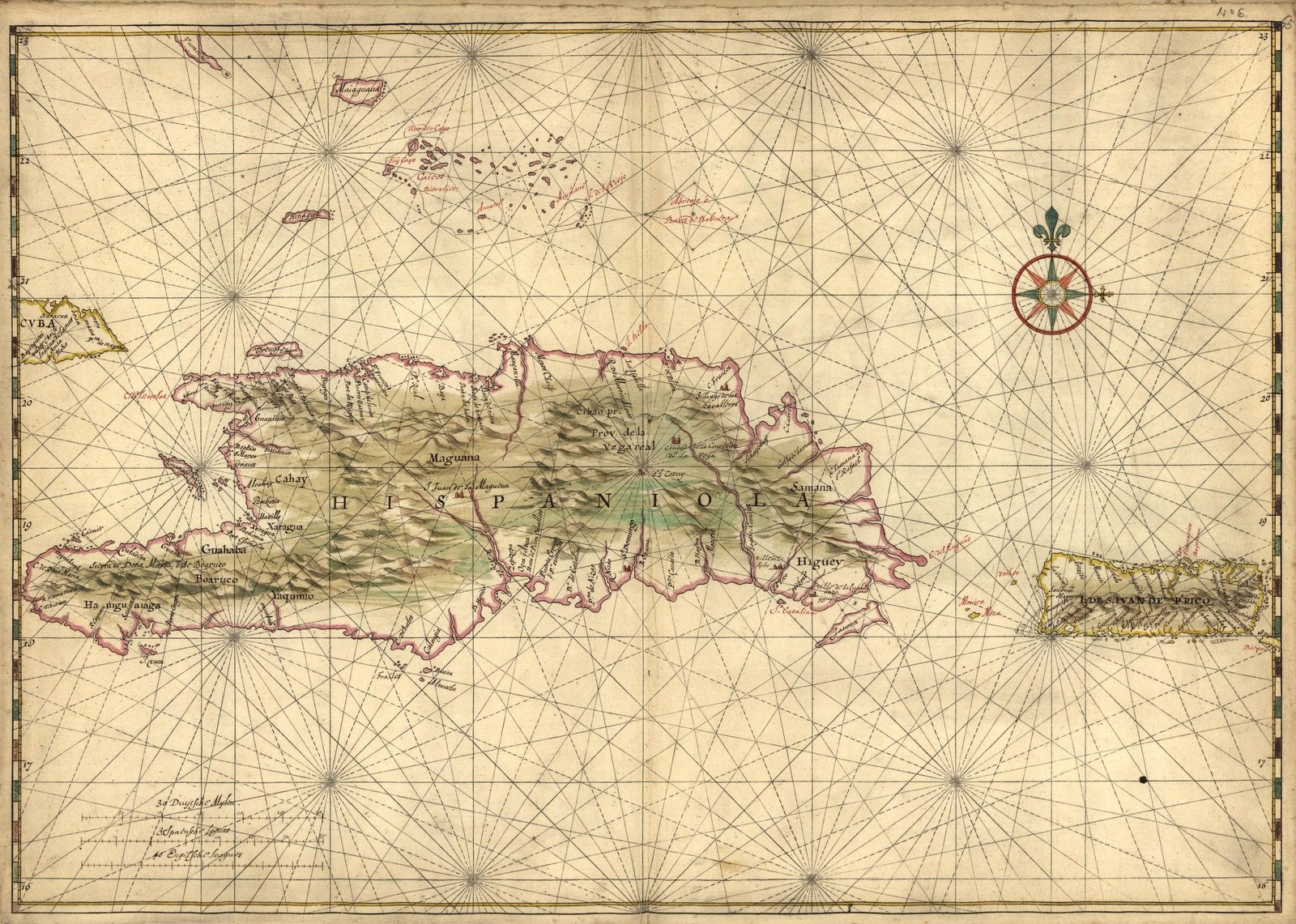
Before there were pirate ships with skull-and-crossbone flags snapping in the wind, before buried treasure and plank-walking and all the things we think of when we hear the word pirate, there were the hunters. Rough, sun-scorched, half-wild people living in the jungles of Hispaniola with nothing but a musket, a pack of hunting dogs, and a very serious rat problem.
This is where our story begins. Not with a cannon blast or a sword fight, but with a campfire. A big, smoky, green-wood campfire, and the smell of roasting meat drifting through the Caribbean heat. If you’ve ever wondered where the very first pirate cats came from, the distant ancestors of Captain Kitty the Kid and every scurvy feline to ever set paw on a ship, well, pull up a rock and sit by the fire. It’s a good tale.
The Buccaneers
Hispaniola & Tortuga, the 1620s
In the 1620s, the Caribbean wasn’t full of pirate ships. Not yet. Instead, it was full of boucaniers.
Now, that word looks fancy when you spell it the French way, but it means something wonderfully simple. A boucan was a big wooden frame used for smoking meat over a slow, green-wood fire. The hunters who used these frames, mostly French, English, and Dutch outcasts who had washed up on the island of Hispaniola, became known as boucaniers, which eventually turned into the English word we all know: buccaneers.
These weren’t sailors. They were jungle people. They lived in rough camps under the canopy, wore leather leggings made from animal hides to protect against the thorny underbrush, and spent their days hunting the wild pigs and cattle that the Spanish had left behind on the islands. The meat they smoked on their boucans lasted for weeks without spoiling, which made it the perfect food for the sailors who passed through the Caribbean. The buccaneers would trade their smoked meat and animal hides for gunpowder, knives, and other supplies. It was a rough life, but it was a life.
And it smelled incredible, if you were a cat.
The Rat Problem
Here’s the thing about a camp full of smoked meat: you’re not the only one who wants it.
Rats loved the buccaneer camps. They chewed through the strips of drying meat. They gnawed on the leather hides. They got into everything. If you’ve ever had a mouse in your kitchen and felt that little spike of outrage, imagine that, but multiplied by hundreds, in a jungle, in the heat, with your entire livelihood hanging on wooden racks.
This is where the first pirate cats come in.
The hunters traded with passing ships for cats the way you might trade for tools or rope, because that’s what a cat was to them. A tool. A living, purring, rat-catching tool. These cats didn’t come with collars and little bells. They had to be tough. A boucanier cat lived in the open jungle, slept under the stars, endured the tropical rain and heat, and earned its keep by protecting the precious food supply.
From Jungle to Sea
Hispaniola & Tortuga, the 1630s–1650s
Starting in the 1630s, the Spanish decided they’d had enough of the buccaneers. These wild hunters on Hispaniola were bad for business. They traded with Spain’s enemies and answered to no crown. So Spain did what empires do. They sent soldiers. They burned the camps. They slaughtered the wild cattle and pigs the hunters depended on, wiped out the food supply entirely. If the buccaneers wouldn’t leave, Spain would starve them out.
The hunters didn’t go quietly. In fact, they didn’t go at all.
Driven from their jungle camps, the buccaneers did something desperate and, in hindsight, world-changing. They grabbed their muskets. They piled into small rowing boats called pirogues. And they started attacking Spanish ships.
At first, it was pure survival. Steal what you need to eat, to live, to fight another day. But they were good at it. Terrifyingly good. And they quickly realized something: stealing a fully loaded Spanish ship was a whole lot easier than chasing a wild pig through the jungle.
Just like that, hunters became pirates.
And they took their cats with them.
Think about that for a moment. One day, a cat is guarding a rack of smoked meat in the green shade of a Hispaniola jungle. The next, that same cat is clinging to the deck of a stolen Spanish vessel, wind screaming through the rigging, the open ocean stretching to the horizon in every direction.
No more jungle. No more solid ground. Just the creak of timber and the endless, rolling sea.
The boucanier cat became a sea cat. The world got a whole lot bigger, and a whole lot more dangerous.
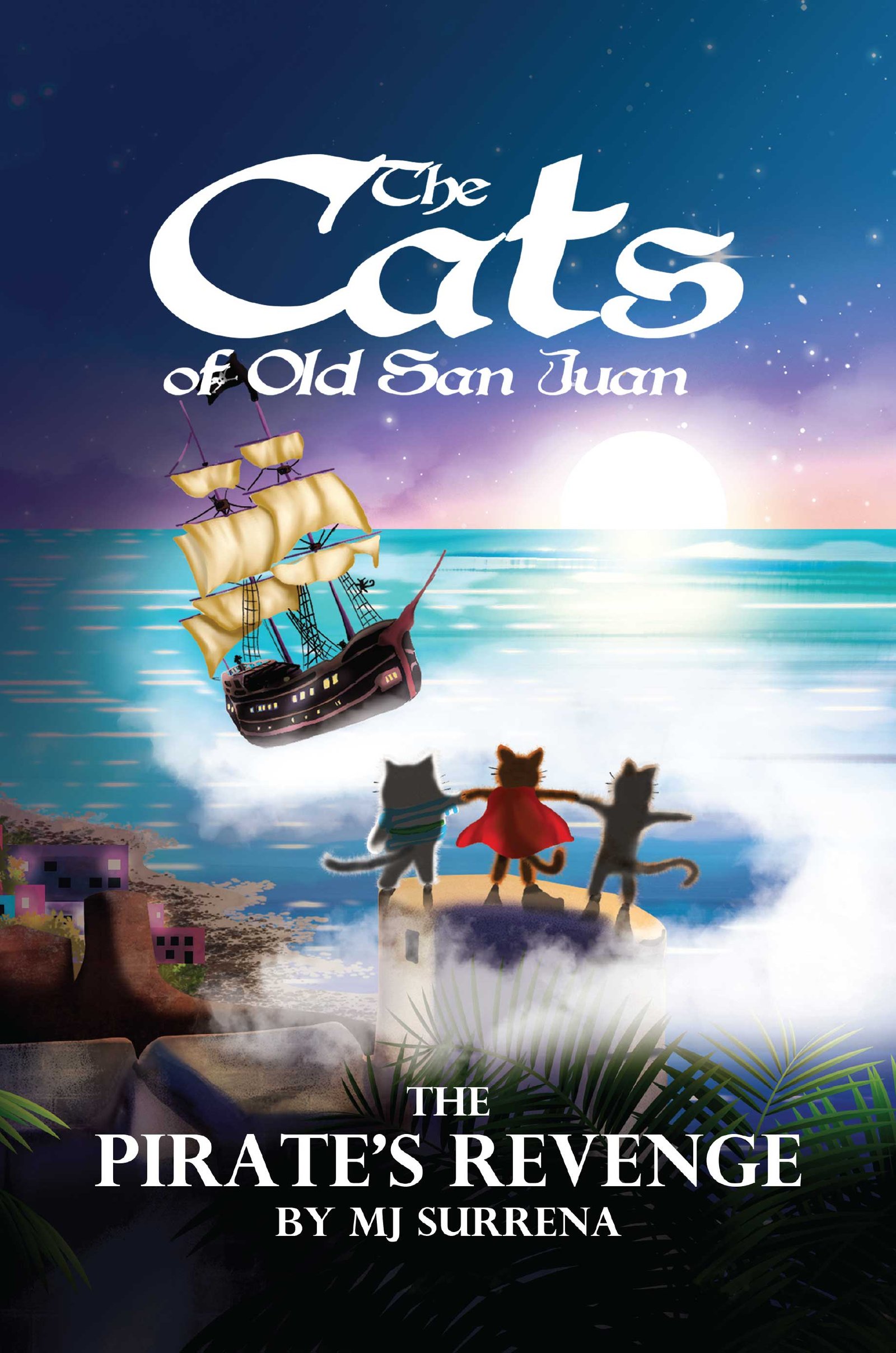
📖 Connection to The Cats of Old San Juan: In The Pirate’s Revenge, Captain Kitty’s crew still has that jungle toughness in their blood. They sleep on deck, they don’t need comfort, and they can survive anywhere. When Campeón first sees them in the mangrove forest, they aren’t lounging around on silk pillows. They’re digging up buried maps and preparing for battle. That’s three hundred years of buccaneer instinct right there.
The Emerald Isle Connection
Montserrat, the 1630s
Now, here’s where things get interesting if you know a certain sleek, black-furred villain.
Captain Kitty the Kid is from Montserrat, a small, steep, impossibly green island in the Lesser Antilles. In the real world, Montserrat was known as the “Emerald Isle of the Caribbean,” and there’s a reason for that. Beginning in the 1630s, Irish and English settlers arrived on the island, and throughout the 1650s, many more were sent there from Ireland. Some by choice, many not.
But Captain Kitty’s ancestors didn’t come to Montserrat first. They were sent to Barbados, where conditions for the Irish were brutal, and escaped from there to the green mountains of Montserrat. His namesake, his great-great-great (many greats) grandmother, Kitty the Cat, was the original pirate in the family line. The very first. Every bit of cunning and ruthlessness in Captain Kitty the Kid started with her.
If those earliest cats arrived on Montserrat as runaways from Barbados, they would have known what it meant to lose everything and claw it back. Green mountains that looked almost like Ireland, warm rain instead of cold, and the sound of folk songs drifting through the tropical night. A strange and beautiful new world, far from home.
It makes you wonder. Whether somewhere deep in that cool, calculating pirate brain, there’s the ghost of an Irish kitten who crossed the Atlantic in the belly of a ship and never saw home again. Whether the restlessness in Captain Kitty, that need to conquer, to possess, to own, is really just the old ache of having lost everything once before.
He’d never admit it, of course. Not to you. Not to anyone.
🐱 Cat-History Fun Facts!
⚓ The Original Pirate Food: The buccaneers’ smoked meat was called viande boucanée, and it’s the ancestor of every piece of dried meat a sailor ever chewed on. Meanwhile, on the other side of the Americas, the Quechua people of the Andes had their own version called ch’arki, dried, salted meat, which the Spanish picked up as charqui and which eventually became the English word “jerky.” Same idea, different campfire. Either way, the cats who guarded those buccaneer camps got the scraps of the very first pirate snack food.
⚓ The Island of the Turtle: The most famous early pirate hideout was Tortuga, a small island off the coast of Hispaniola. It got its name because from a distance, it looked like a giant sea turtle floating in the water. Cliffs rose straight up from the sea on one side, making it nearly impossible to attack. A perfect place for a pirate cat to perch on the rocks and watch the horizon.
⚓ Leather Leggings & Cat Magnets: The early buccaneers wore rough leather leggings made from animal hides to protect their legs from thorns and insects. Between the rawhide clothes and the smoked meat hanging everywhere, a buccaneer camp must have smelled absolutely wonderful to a hungry cat, and absolutely terrible to everyone else.
What Comes Next
So there you have it. The very beginning. Before the golden age, before the famous names and the legendary battles, there were hunters and cats in the jungle, smoke rising through the trees, and the distant rumble of a world about to change.
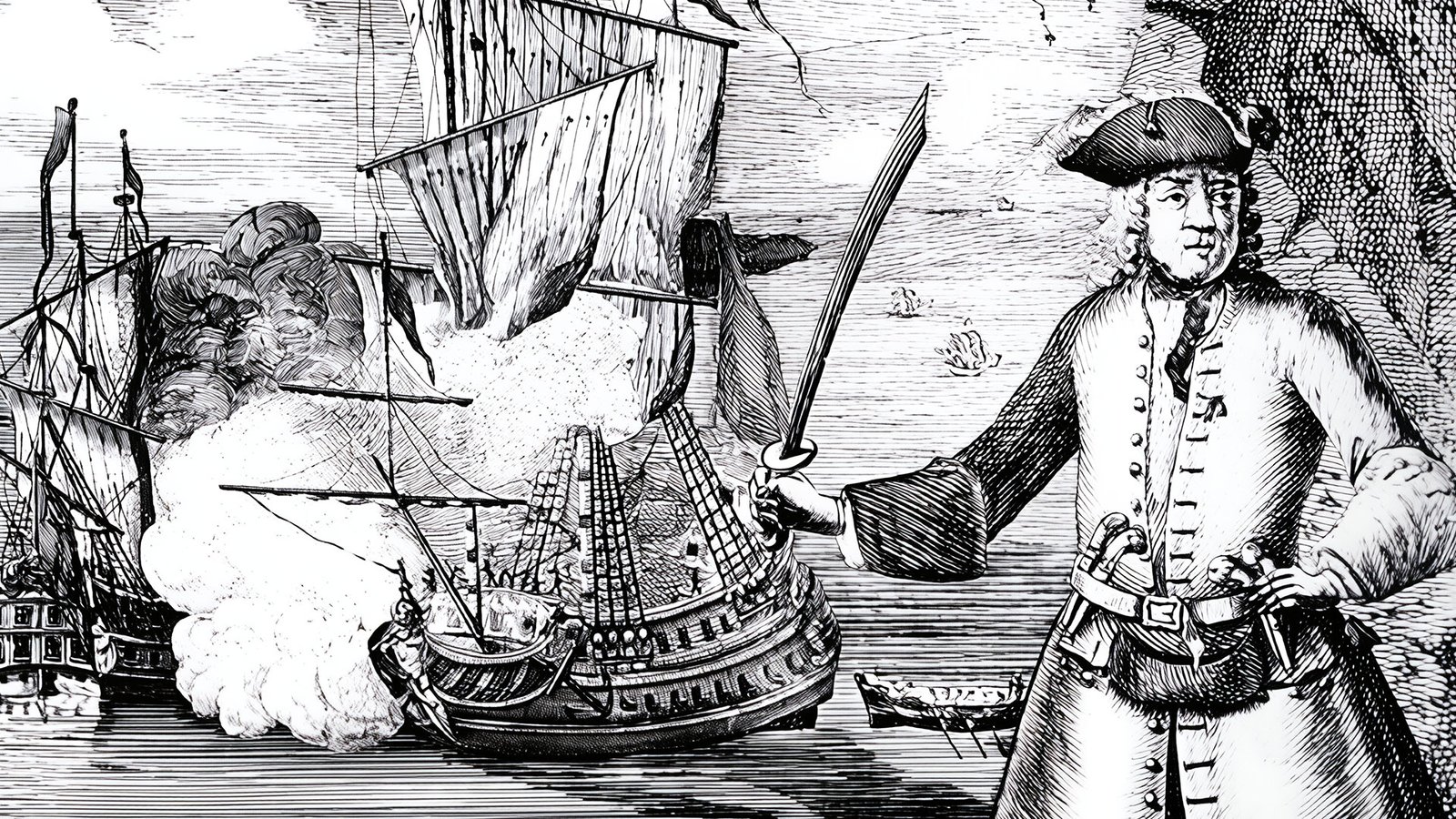
In the next post, we’ll follow these cats from the jungle camps onto the open sea, into the age of Henry Morgan and the great buccaneering raids of the 1660s–1680s. The ships get bigger. The battles get fiercer. And the cats? They get a whole lot more interesting.
Stay tuned.